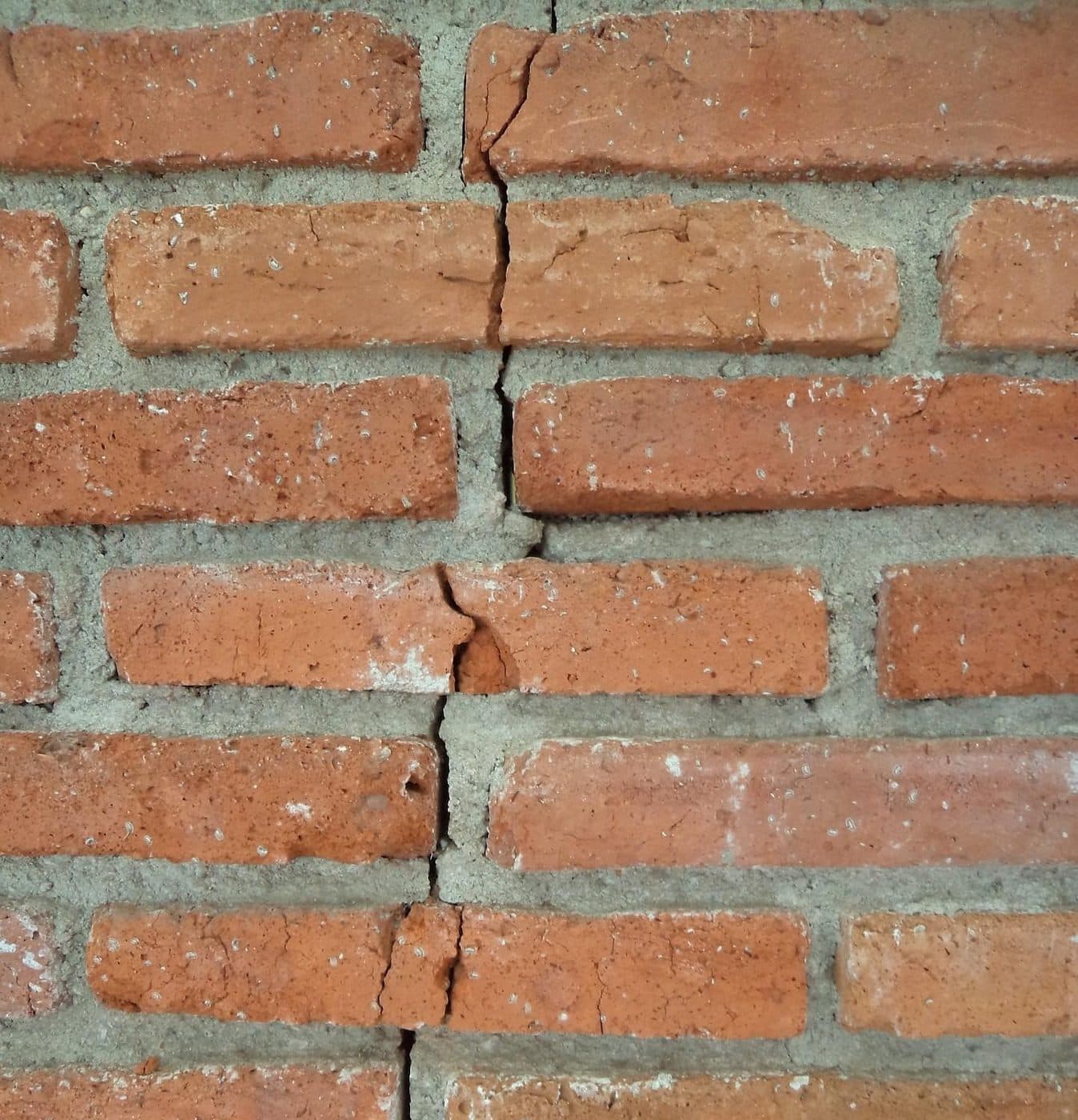
Signs of Foundation Problems
A plain-English guide to the warning signs in Jamestown-area homes, what's urgent, what's cosmetic, and when to make the call.
The warning signs, from inside the house
Foundation trouble rarely announces itself. It shows up as small annoyances that are easy to blame on an old house. The signs below are the ones worth paying attention to, especially when more than one appears at once.
Doors and windows that stick or won't latch
When a foundation settles unevenly, door and window frames rack slightly out of square. A door that suddenly sticks at the top corner, or a window that's harder to open than it used to be, can be the frame moving with the house.
Cracks above doors, windows, and in drywall
Diagonal cracks running from the corners of doorways and windows are classic stress cracks. So are cracks where walls meet ceilings. Hairline drywall cracks alone are common; cracks that keep reappearing after you patch them are telling you something is still moving.
Sloping or bouncy floors
Floors that slope noticeably, or feel springy over a crawl space, can point to settlement or to failing support below, common where older crawl space posts and beams have shifted or rotted in our damp soils.
The warning signs, from the basement
Cracks in the foundation wall
Vertical and diagonal cracks in poured walls are often shrinkage or minor settlement. The serious ones are horizontal cracks and stair-step cracks along the mortar joints of block walls. These mean the soil outside is pushing harder than the wall can resist.
Walls that bow or lean inward
A basement wall that bulges in the middle or leans in at the top is under more pressure than it was built for. Hold a level against it. Visible deflection is a sign to stop waiting. This is the common end state of an ignored horizontal crack.
Water, efflorescence, and white powder
Persistent dampness, a chalky white residue (efflorescence) on the walls, or water tracking in along a crack all point to moisture moving through the foundation, the fuel for freeze-thaw damage in our winters.
Why these signs matter more in the Twin Tiers
Two local factors make foundation problems progress faster here than in milder, drier regions: the clay-heavy soils across Chautauqua County that swell and shrink with moisture, and lake-effect freeze-thaw cycles that pry at any crack water can reach. Add a housing stock full of pre-1940 stone foundations, and small problems have a way of compounding through a single winter. Catching them early is the difference between a minor repair and a major structural one.
Foundation warning signs, common questions
What are the first signs of foundation problems?
The earliest signs are usually small and easy to dismiss: a door that starts sticking, a hairline crack above a window or doorway, or a thin diagonal crack in the basement wall. Outside, look for stair-step cracks in brick or block. Individually these can be minor, but several appearing together, or any one of them growing, is the cue to have it looked at.
When is a foundation crack serious?
Horizontal cracks and stair-step cracks in block walls are the ones to take seriously. They signal soil pressure pushing on the wall. Any crack wider than about a quarter inch, one that's clearly growing, or one paired with a wall that's leaning or bowing inward warrants prompt professional evaluation. Thin vertical cracks in poured concrete are usually shrinkage and mainly a water-entry concern.
Should I worry about a wet basement?
A persistently damp or leaking basement is worth addressing on its own, but it can also be an early warning. Water finding its way in through a crack is the same water that freezes and widens that crack each winter. If moisture appears alongside any cracking or movement, treat the two together rather than just mopping up.
How fast do foundation problems get worse?
It depends on the cause, but our climate accelerates things. Lake-effect freeze-thaw cycles work on a crack all winter, and clay soils swell and shrink with moisture. A problem that looks stable in summer can move noticeably over one wet fall and hard winter, which is why early evaluation usually saves money.
Seeing one of these signs?
Send a photo or describe it over the phone. We'll tell you honestly whether it needs attention now or just monitoring.