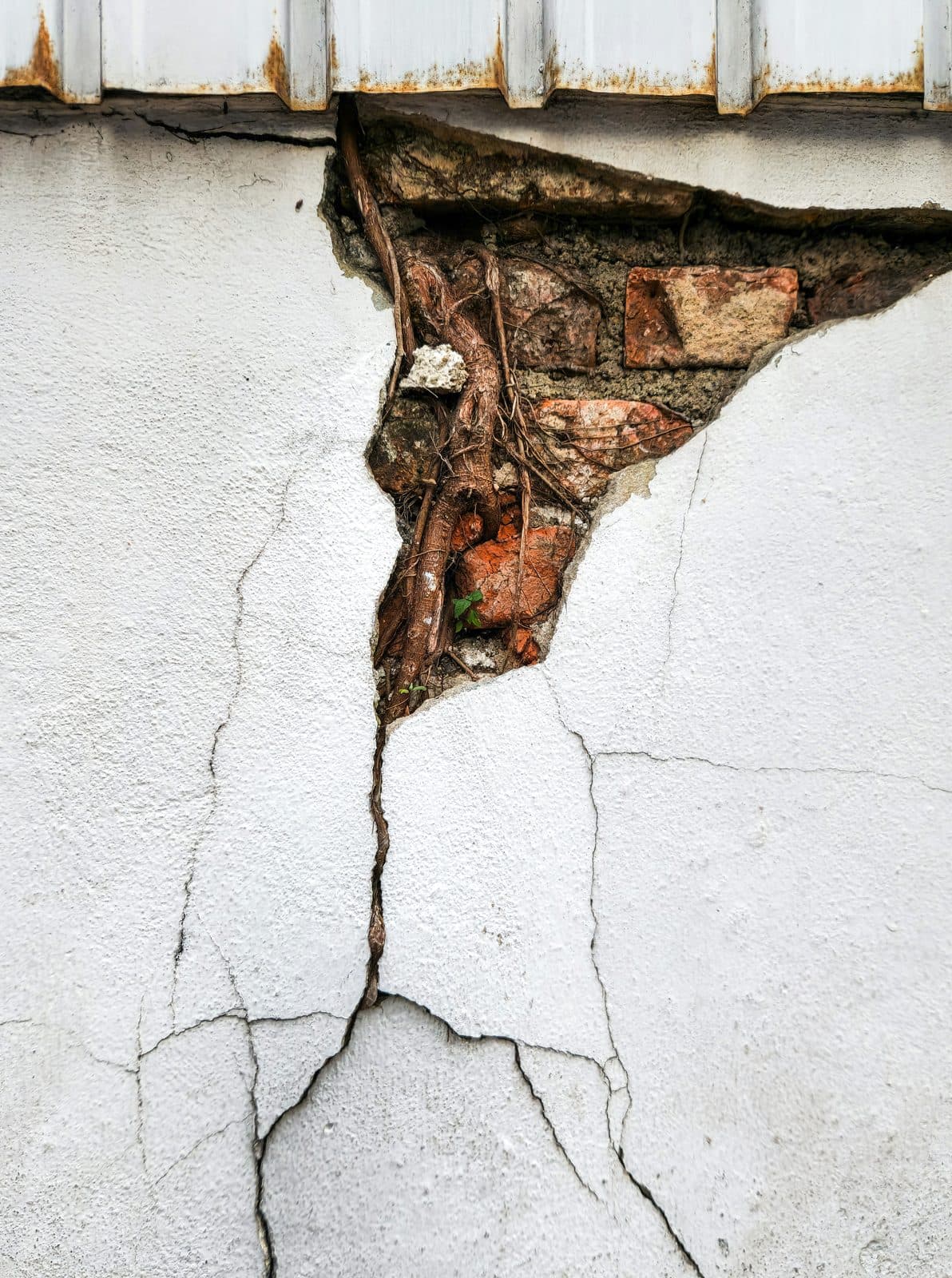
Settling & Sinking Foundation Repair in Jamestown, NY
Sloping floors, sticking doors, stair-step cracks marching up one corner. Your house is telling you where it's moving. Piering stops it for good.
Why Jamestown-area homes settle
The valleys that made this region, carved by glaciers, floored with the silts and clays they left behind, are soft ground to build on. Many neighborhoods in Jamestown, Falconer, and Frewsburg sit on valley-bottom soils that compress under load and lose bearing strength when saturated. A century of wet springs, plumbing leaks, and changing drainage patterns slowly robs support from under footings that were shallow to begin with. The house above doesn't fall. It leans, an eighth of an inch a year, until the doors tell on it.
The permanent fix: transfer the load to soil that can carry it
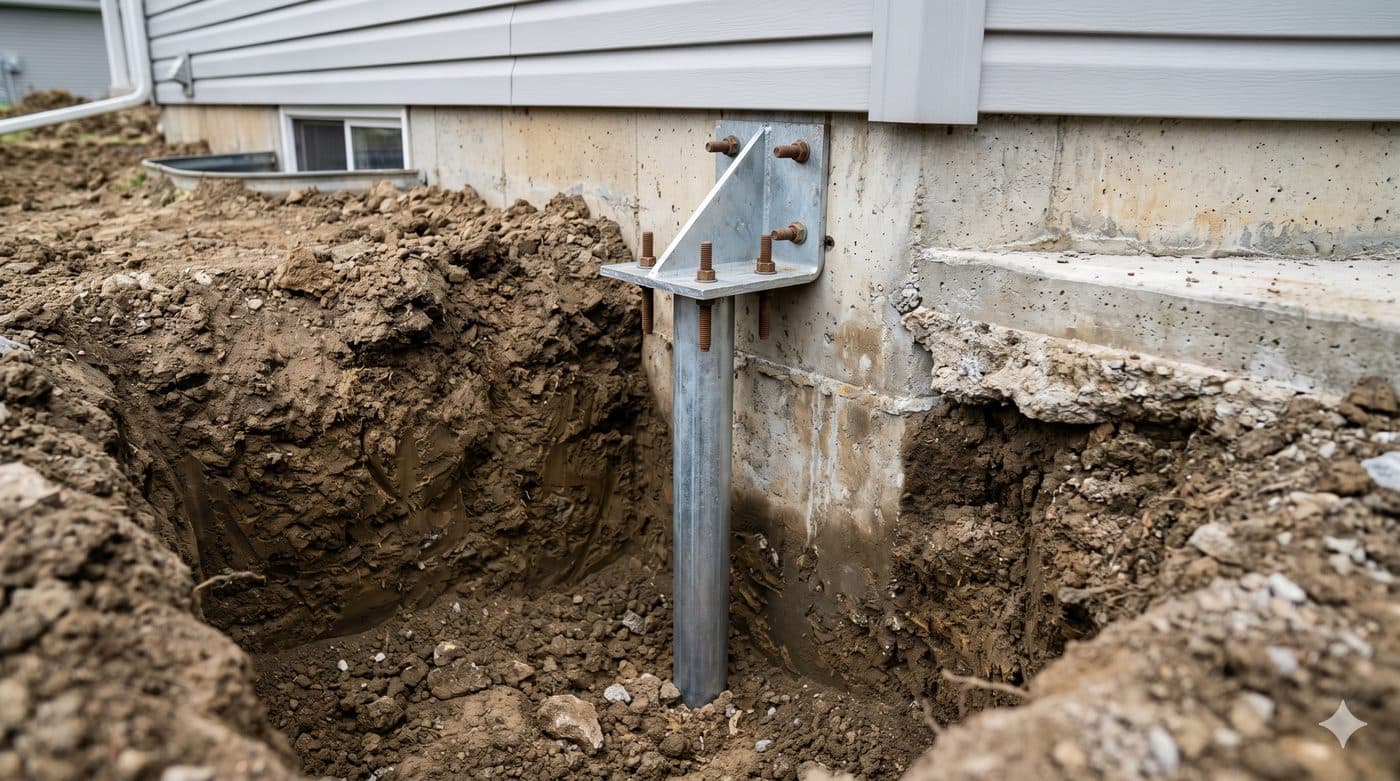
Push piers
Steel pier sections driven hydraulically beneath the footing until they reach dense, load-bearing strata, often well below the soft valley fill. The home's weight is then transferred to the piers. Settlement stops because the house no longer rests on the soil that failed.
Helical piers
Screw-style piers turned into the ground to engineered torque, ideal for lighter structures, porches, additions, and the cottage construction common around Chautauqua Lake, where push piers can't develop enough reaction force.
Both systems install from outside or inside the basement with compact equipment, in days rather than weeks, and in many cases can lift the settled section measurably back toward level, closing cracks and re-squaring door frames as it rises.
What settlement does to resale if you wait
Unrepaired settlement is the first thing a home inspector flags and the fastest way to lose a sale in this market. A documented pier repair, by contrast, typically comes with transferable engineering documentation. Buyers and lenders treat the problem as solved. Repairing on your schedule beats disclosing on a buyer's.
Frequently asked questions
How much does it cost to fix a settling foundation?
It depends on how many piers the section needs. Most residential settlement repairs use several piers along the affected area. Small, single-corner settlements are at the low end; whole-side stabilization is a larger job. A free on-site evaluation is the only way to price it honestly.
How do I know if my house is settling or just old?
Every old house has character; settlement has a direction. Look for clusters: stair-step cracks concentrated on one corner, doors that stick along one side of the house, floors that slope toward the same area, gaps between trim and ceiling that widen toward one end. If the symptoms all point the same way, the foundation is moving there.
Will settlement stop on its own?
Sometimes new construction settles slightly and stabilizes within a few years. But settlement driven by soft or washing soils, common on the valley floors around the Chadakoin and Conewango, tends to continue and often accelerates, because movement opens paths for more water. A foundation that has moved visibly is rarely done moving.
Floors sloping? Find out what's moving.
A free evaluation maps where your foundation is settling, why, and exactly what stopping it costs.